
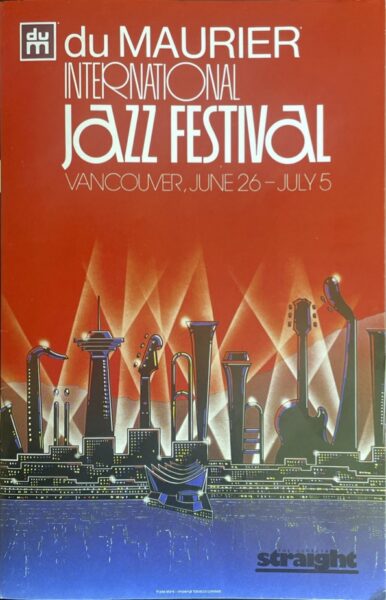
By 1987, Coastal Jazz and Blues Society had set the standard for the presentation of jazz and blues music in the Pacific Northwest. They had made global headlines with the first du Maurier International Jazz Festival during Expo 86. The City of Vancouver officially commemorated the week of June 26, 1987 “du Maurier International Jazz Festival Week,” citing the commitment of Coastal Jazz & Blues Society to the “promotion, growth, development, dissemination, and enjoyment of jazz and blues music in Vancouver.”
Meanwhile, the US had just approved AZT to be used in the treatments of AIDS, and Starbucks opened their first international location in Vancouver. The Loonie made its debut, making it easier for Canadians to tip their local busker.
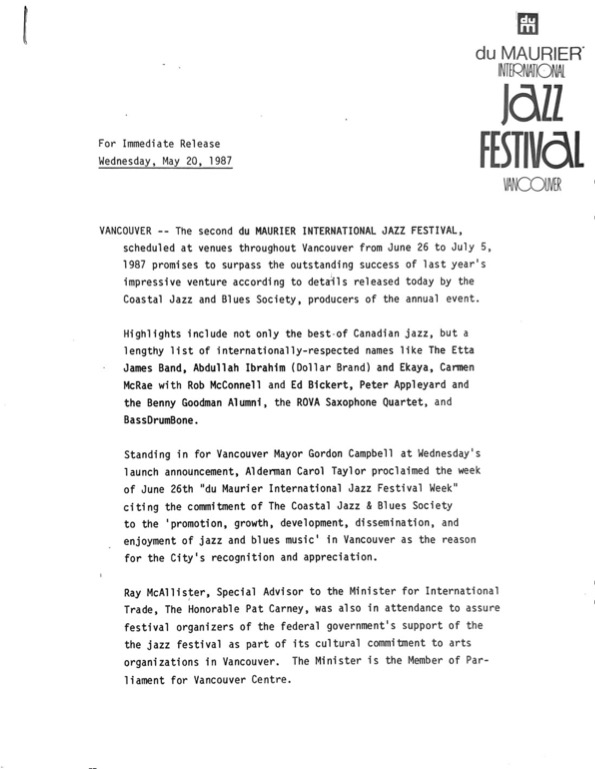
It was a good year for Coastal Jazz financially speaking, too. With du Maurier as the title sponsor, and contributing about $300,000 in cash and promotional support, not to mention other cash and in-kind sponsors, they were feeling flush. (Editor’s note – arts organizations would LOVE this kind of financial support today!) Then the federal government kicked in another $50,000, eager to see a return of Expo 86-level tourism to the city. A local MP was quoted as saying, “This year’s jazz festival will be an integral component in a coordinated season of cultural festivals, but also enhance Vancouver as a tourist destination, thereby creating jobs.” (Editor’s note again – we still are.)
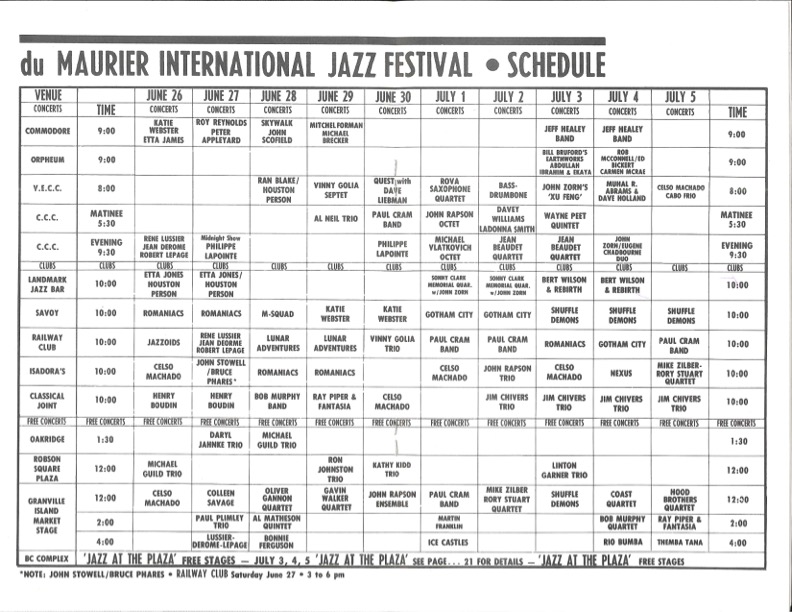
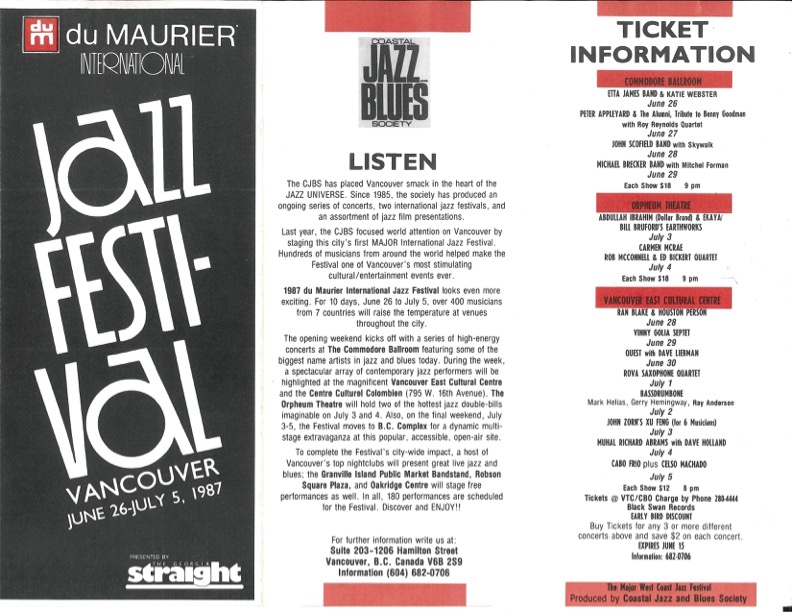

With more money Coastal Jazz could spread their programming wings, expanding the festival from one week to ten days and spreading the venues far and wide across the city. There were daily public performances by international artists on Granville Island, lunchtime shows at Robson Square Plaza, and even “bop while you shop” at Oakridge Centre. The Festival took over three stages at the British Columbia Complex at the heart of the former Expo 86 site. Big names like the Etta James Band and Abdullah Ibrahim headlined the Commodore and Orpheum, respectively. Carmen McRae and a 21-year old Jeff Healey made big appearances. The Jazz Festival buzz was everywhere.
“Vancouver may well have had the hippest festival on the continent in 1987.” (The Globe and Mail)
As conversations with people who were around then can attest, aside from a small staff from Coastal, most people who worked on the Festival were volunteers. Many were drawn to it by their true love for the music, and that set the tone for how artists were treated. When an artist was being picked up at the airport, the chances were pretty good it was by a super fan. One suspects that genuine respect and admiration probably helped form a great impression of the festival and of Vancouver overall.
Have a favourite Festival memory? Join the #vanjazzfest conversation on Instagram, Facebook or X @coastaljazz. Did you miss the first of our Festival Flashbacks? Click here.
Before you go, a small request:
Free and accessible events like the Vancouver International Jazz Festival are still vital to fostering community, supporting local artists, and maintaining cultural traditions, while also driving home the economic benefits of a thriving arts sector. But we can’t continue without government support.
Help us target local politicians in the lead up to the 2024 Provincial Election. We need you to advocate on our behalf by joining our letter-writing campaign. Click here for more information on our advocacy campaign.
